Dog Harness Size Chart
Harnesses are built around one number: your dog's chest girth. Measure it correctly, then check it against the size chart for the exact harness you are buying.
Harness size chart
Ready when you are
Measure the chest girth first — the guide below shows exactly where.
Nothing you type is stored on our server.
No signup · No email · Everything is calculated in your browser
A dog can have a thick coat, a double coat, or both — either way it adds bulk at the chest, so leave a little more room. Most harnesses are sized on the chest measurement alone.
Your brand's size ranges (optional — copy them from the product page)
—
That is the size to shop — the matching products are listed below.
How to measure chest girth
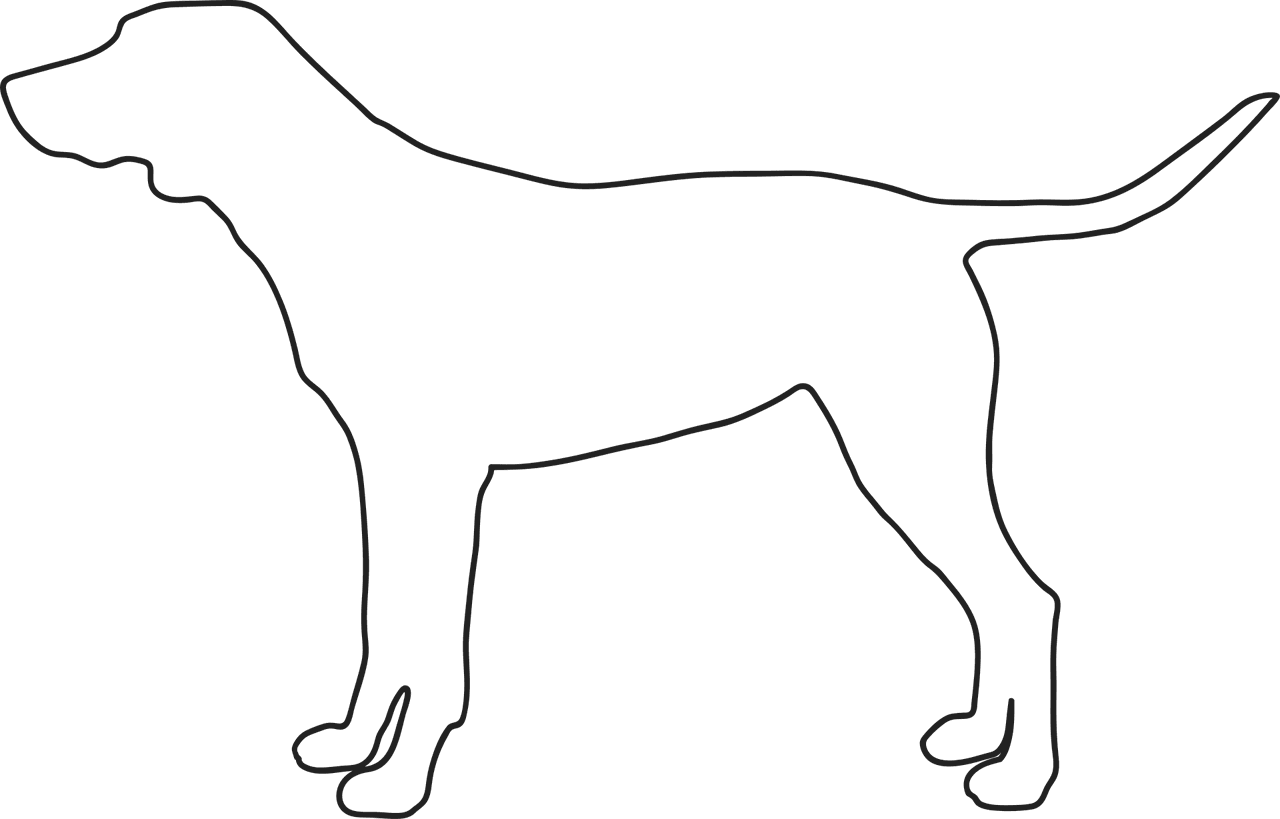
Chest girth is the AKC’s most important measurement for harnesses and clothing, because it reflects the widest part of the body.
Where the harness sits
Harnesses are built around chest girth, not neck size and not weight. Get this one number right and the size question mostly answers itself.
- Stand your dog up. Measuring while they are sitting or lying down changes the number, because the spine is not aligned and the weight is not evenly distributed.
- Find the spot: the widest part of the rib cage, usually just behind the front legs. Not the neck, not the narrow part of the waist behind the ribs.
- Wrap the tape all the way around that widest point, keeping it level — not sloping down toward the belly on one side.
- Slide two fingers under the tape. This is the fit allowance: snug enough to stay put, loose enough not to pinch.
- Read the number where the tape meets itself, and write it down (or double-check it once more — a re-measure costs seconds and prevents a return).
- No tape measure? Use a piece of string, ribbon or a shoelace, wrap it snugly but not tight, mark where it overlaps, then lay it flat against a ruler.
Six ways people get it wrong
| Mistake | What it does to the number | Fix |
|---|---|---|
| Measuring at the neck instead of the rib cage | Too small — the harness will not close | Measure at the widest rib, behind the front legs |
| Measuring while the dog sits or lies down | Too small, and different each time | Stand the dog up, weight even |
| Measuring the narrow waist behind the ribs | Several inches too small | Measure at the widest point, not the slimmest |
| Pulling the tape tight | Too small, and the strap cannot move | Two fingers must still fit under the tape |
| Measuring over a thick coat and forgetting it | Right in winter, loose in summer | Measure in the coat you actually walk in |
| Only measuring once, over a wriggling dog | An inch of error — often a whole size | Measure twice, with a helper if you can |
Why size names are not standard
"Medium" is not a measurement
Each brand publishes its own girth ranges, and the same size name can cover noticeably different numbers from one brand to the next. Real ranges from three harness listings:
| Product listing | Small (girth) | Medium (girth) | Large (girth) |
|---|---|---|---|
| Product A | 20–22 in | 22.2–27.5 in | 26–33 in |
| Product B | 15–21 in | 21–32 in | 27–40 in |
| Product C | 18–22 in | 22–27 in | 27–34 in |
So if a calculator tells you "your dog is a medium" without knowing which harness you are buying, it is guessing — and it will be wrong for some of the harnesses on the market. That is why the tool above works from your product's ranges.
Typical girth ranges (rough guide)
It is a starting point, not a standard — brands differ, as the table above shows. Read it that way and it is useful; read it as a rule and it will send you back for a return.
| Size name | Girth range you will often see | Often roughly |
|---|---|---|
| XXS / XS | about 10–15 in | very small breeds, puppies |
| Small | about 14–21 in | small breeds |
| Medium | about 20–28 in | medium breeds — the widest variation between brands |
| Large | about 26–35 in | large breeds |
| XL / XXL | about 32–45 in and up | giant breeds, or deep-chested dogs |
How to read this table
If your dog is between sizes
The usual advice: size up
A slightly looser harness can be adjusted down at the straps; a tight one cannot be made bigger, and it is the one that rubs and restricts the shoulders.
Two exceptions worth knowing about:
- If the harness has little adjustment and the larger size's minimum is well above your dog's girth, the "size up" rule can leave you with something that slides. Check the larger size's lower bound, not just its upper bound, before you commit.
- If the dog is still growing, the larger size is usually the better buy anyway, because the girth is heading upward — which is what the calculator's "still growing" option flags.
Checking the fit after it arrives
The six-point fit check
A size chart gets you close; this tells you whether it is actually right. Do it on a walk, not just in the hallway.
| Check | Good fit looks like | What it means if not |
|---|---|---|
| Two-finger rule at the chest | You can slip two fingers under the chest strap | Cannot fit them: too tight, size up |
| Shoulder movement | The front legs swing freely, no shortened stride | Stride looks clipped: the chest panel is too small or too far forward |
| Pull-over test | You cannot pull the harness off over the shoulders | It slides off: too loose, or the wrong shape for your dog |
| Rubbing after a walk | No bald patches, no red lines, no chafing behind the front legs | Rub marks: too tight or badly placed straps |
| Straps sitting level | Chest strap level, no twisting, buckles not digging in | Twisting: readjust, then re-check both finger test and stride |
| Escape attempts | Dog cannot back out of it when they plant their feet | Backing out: usually too loose, or a style that does not suit a narrow-chested dog |
Harness types and what they change
The style decides what else you measure
The girth measurement matters for all of them; the style decides which other numbers you need.
| Type | Best for | What to watch |
|---|---|---|
| Step-in (two loops, dog steps in) | Small dogs, calm dogs, quick on-and-off | Needs neck as well as chest girth; a loose neck loop is how dogs back out |
| Over-the-head (single chest strap) | Most dogs, everyday walks | Chest girth is the key number; check the neck opening clears the head comfortably |
| Front-clip / no-pull | Dogs that pull | Fit matters more: too loose and the front ring flops, too tight and it restricts the shoulder |
| Back-clip (traditional) | Calm dogs, casual walks | Less critical fit; still check it cannot slip over the shoulders |
| Padded / fleece-lined | Short coats, thin-skinned dogs, winter | Padding adds bulk — measure with the coat you will walk in |
Neck size and step-in harnesses
Step-in styles are the exception
Most harnesses are sized on chest girth alone; step-in styles also close around the neck, and getting that loop wrong is the usual reason a dog backs out.
- Measure where the collar sits, around the base of the neck.
- Start near the withers — the ridge between the shoulder blades — and wrap around to the front of the chest.
- Keep the same two-finger allowance as you used for the chest.
If a step-in harness's neck loop is looser than the dog's neck measurement, that is the one to skip, no matter how well the chest fits.
One last check before you buy
If your dog is very narrow-chested or very broad-chested, compare the harness's shape, not just its size — a style that suits a deep chest may sit badly on a slim one, and no size number fixes that.
Puppies and growing dogs
A puppy's girth keeps changing, so a harness bought at eight weeks is a short-term purchase. Three practical notes:
- Re-measure monthly while your puppy is growing, and whenever their weight changes noticeably.
- Look for a harness with generous adjustment rather than one that only just fits today — the adjustment range is what buys you months.
- When a puppy sits between sizes, the larger one is usually right — both because of the growth direction and because a slightly loose harness can be taken in at the straps.
The adjustment range is what you are really buying
A harness that only just fits today is a harness you will replace. The straps are the part that buys you time.
This tool has no growth timeline built in, because we could not find an authoritative month-by-month chart for girth. Re-measuring is faster and more reliable than any prediction.
What to buy
As an Amazon Associate I earn from qualifying purchases. The links below are affiliate links — they cost you nothing extra. This page contains affiliate links. If you buy through them, we may earn a commission at no extra cost to you.
Your result above gives the chest girth range — these harnesses are the ones sized around it.
Questions we get a lot
What size harness does my dog need?
Measure the chest girth behind the front legs, then find which range on the chart for your specific harness contains that number. The size name alone tells you nothing, because it is not a standard measurement.
Where exactly do I measure for a harness?
Around the widest part of the rib cage, usually just behind the front legs, with your dog standing.
How tight should the harness be?
Snug but not tight — you should still be able to slide two fingers under the tape or strap. If you cannot, it is too tight.
My dog is between two sizes. Which one?
Size up. A slightly loose harness can be adjusted down; a tight one cannot be made bigger and is the one that rubs.
Why can't you just tell me the size?
Because size names are not standardized. We show real listings where "medium" ranged from 21 to 32 inches, and the AKC says plainly that sizing varies by brand. A single answer from us would be wrong for some harnesses.
Can I work out the size from my dog's weight?
No, not reliably. Two dogs of the same weight can have quite different chest depths, and girth is the measurement harnesses are built around. Weight is not a substitute.
Do I need to measure the neck too?
Only if you are looking at a step-in harness with a neck loop. For over-the-head and front-clip styles, chest girth is the number that decides the size.
My dog's girth is 24 inches. What size is that?
It depends entirely on the brand. It could be a medium that runs to 27 inches, or a large whose smallest size starts at 23. Check the listing, or use the tool above with that product's ranges.
Does a thick coat change the size?
It can, yes. A double coat adds bulk around the chest, so a harness that fits in summer may sit tighter in winter. Measure in the coat conditions you actually walk in.
What if the harness I bought still does not fit?
Check it against the fit table above: two fingers at the chest, free shoulder movement, no pull-over. If it fails, it is usually one size out rather than the wrong design — but a very narrow-chested dog may need a different style.
Are harnesses better than collars?
For walking and pulling, many owners and trainers prefer a harness because the load is spread across the chest rather than the neck. For identification, a collar with a tag is still the usual choice. If your dog has a neck or breathing condition, ask your vet which they recommend.
How do I measure without a tape measure?
Use string, ribbon or a shoelace around the chest, mark where it overlaps, then lay it flat next to a ruler.
How we work this out
This page combines one measurement you take with one set of numbers you supply.
- Your chest girth — measured the way the AKC describes: widest part of the rib cage, just behind the front legs, dog standing, two fingers under the tape.
- Your brand's size ranges — copied from the product page you are buying from. We do not bundle a size table of our own, because size names are not standardized and a table of ours would be wrong for some products.
- The comparison — we check which ranges contain your girth, flag when it sits on a boundary, and apply the usual "size up when between sizes" rule.
What this tool will not do: it will not guess a size from weight, breed or a photo, and it will not override a product's own chart. It also cannot judge whether a style suits your dog's shape — a narrow-chested or broad-chested dog may need a different style rather than a different size. If your dog has a shoulder, neck or breathing condition, ask your vet before choosing a walking harness.
Related tools
- Dog Collar Size Chart
Neck size — and why it is measured differently from chest girth. - Dog Crate Sizes Calculator
The other big "buy the right size first time" decision. - Dog Bed Size Chart
Bed size from weight and sleeping position. - Dog Feeding Calculator
Turn your bag's feeding table into cups per meal.
Last updated: 2026-10-19.