Dog Crate Sizes: What Size Crate Does Your Dog Need?
Tell us how big your dog is, and we'll tell you which crate to buy — plus why that size, what to check before you pay, and the mistakes that cost people a second crate.
Crate sizes
Ready when you are
Pop in your dog's weight below.
Nothing you type is stored on our server.
No signup · No email · Everything is calculated in your browser
—
That is the size to shop — the matching products are listed below.
How to measure your dog at home
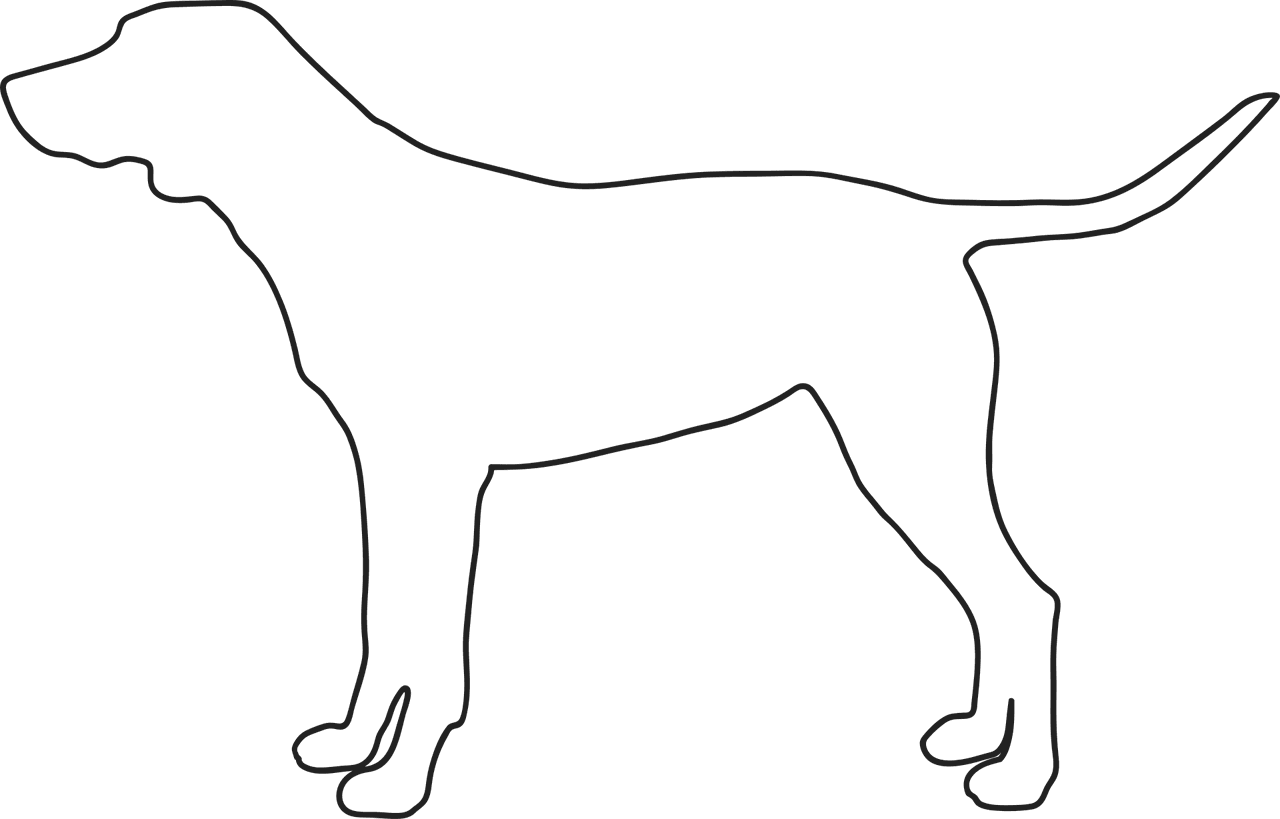
Same definition MidWest uses for crate length. (The AKC’s “back length” for coats is different: it starts at the base of the neck.)
MidWest’s own sizing page says “standing upright”, though the illustration on that page says “sitting”. Standing is the figure that matches what a crate has to accommodate.
You need two numbers, and it's much easier with a helper:
- Length: stand your dog up, then measure from the tip of the nose to the base of the tail — not the tail tip.
- Height: measure from the floor to the top of the head, with the head held naturally. Don't stretch the neck upward.
- Add 2–4 inches to both numbers. That extra room is what lets them turn around and lie flat.
Tip: measure on a hard floor, and hold a treat so your dog stands still and looks straight ahead. If you're between two measurements, round up.
One more thing people forget: a "42-inch crate" usually means 42 inches measured outside. The interior is smaller — often by an inch or two, though we could not find a published standard for the difference, so treat that as our estimate rather than a manufacturer's figure. The interior is what your dog actually fits into, so allow for it before comparing.
Sizing when your dog isn't a textbook shape
Weight tables assume an average build. Three groups sit outside the average, and all three have the same fix: measure instead of estimating.
- Long-bodied, short-legged breeds (Dachshund, Corgi, Basset Hound): their back needs extra length, so they usually go one size up from what their weight suggests.
- Deep-chested, leggy breeds (Greyhound, Whippet, Boxer): height matters more than length here — check the interior height first.
- Fluffy double-coated breeds (Husky, Chow Chow, Samoyed): the coat adds real width and height. Measure with the fur, not against it.
What your result means
The number you get is the crate length that fits most dogs in your dog's weight range. Crate sizing comes down to three things: your dog should be able to stand up without crouching, turn around, and lie down stretched out. Too small and they can't settle; much too large and house training gets harder.
If you can get a tape measure out, trust it over the weight table: nose to tail base for length, floor to head top for height, then add 2–4 inches to each. Weight is the shortcut for when you're shopping online and can't measure — not the best measurement.
Buying for a puppy? Size for the adult dog
Puppies grow fast — they do most of their growing in the first year, and large breeds keep filling out after that. Buy the crate that fits your puppy's expected adult weight, then use a divider panel to shrink the usable space while they are small. If you are unsure what that adult weight will be, ask the breeder or your vet for an estimate. That way you buy once instead of twice.
Yes, the crate will look comically empty at first. That's normal — a Great Dane puppy in a 54-inch crate looks like a rabbit in a suitcase. The divider is what makes it work.
Crate size chart by weight
| Dog weight | Crate length | Max. dog height | Max. dog length | Size label |
|---|---|---|---|---|
| 1–6 lb | 18 in | 12 in | 17 in | Tiny |
| 7–11 lb | 22 in | 14 in | 20 in | XS |
| 12–20 lb | 24 in | 18 in | 22 in | S |
| 21–40 lb | 30 in | 20 in | 30 in | M |
| 41–70 lb | 36 in | 23 in | 34 in | Intermediate |
| 71–90 lb | 42 in | 28 in | 40 in | L |
| 91–110 lb | 48 in | 30 in | 46 in | XL |
| Over 110 lb | 54 in | 36 in | 54 in | XXL |
Always double-check against your dog's actual measurements — weight is a shortcut, not a measurement.
Size chart by breed (24 common breeds)
Show the breed table
| Breed | Typical adult weight | Suggested crate length |
|---|---|---|
| Chihuahua | 3–6 lb | 18 in |
| Yorkshire Terrier | about 7 lb | 22 in |
| Shih Tzu | 9–16 lb | 22–24 in |
| Pug | 14–18 lb | 24 in |
| Dachshund (standard) | 16–32 lb | 24–30 in * |
| French Bulldog | under 28 lb | 30 in |
| Shiba Inu | 17–23 lb | 24 in |
| Beagle | 20–30 lb | 24–30 in |
| Cocker Spaniel | 20–30 lb | 24–30 in |
| Corgi (Pembroke) | up to 30 lb | 30 in * |
| Border Collie | 30–55 lb | 30–36 in |
| Siberian Husky | 35–60 lb | 30–36 in |
| Australian Shepherd | 40–65 lb | 30–36 in |
| Poodle (standard) | 45–70 lb | 36 in |
| Boxer | 50–80 lb | 36–42 in |
| German Shepherd | 50–90 lb | 36–42 in |
| Labrador Retriever | 55–80 lb | 36–42 in |
| Golden Retriever | 55–75 lb | 36–42 in |
| Doberman Pinscher | 60–100 lb | 36–48 in |
| Bernese Mountain Dog | 70–115 lb | 36–54 in |
| Rottweiler | 80–135 lb | 42–54 in |
| Great Dane | 110–175 lb | 48–54 in |
| Saint Bernard | 120–180 lb | 54 in |
| Mastiff | 120–230 lb | 54 in |
* Long-bodied breeds like Dachshunds and Corgis need extra length for their back. Size these by measured length, not weight.
Where a breed shows a range, it spans two weight bands: smaller dogs of that breed fit the lower figure, larger ones need the higher. The calculator above works from your dog's weight, so the single figure it returns will usually be the one that matches a dog of that weight — the range covers the breed as a whole, and it is the safer reading when you are buying before you know the adult weight. The same chart, with 53 breeds and the full derivation, is on the dog crate size chart by breed.
Wire, plastic or soft-sided? Compare the types
Size is the same for every crate style — but the style changes how the crate gets used, and choosing the wrong type is one of the most common reasons people end up buying twice.
| Type | Best for | Watch out for |
|---|---|---|
| Wire (folding, single or double door) | Home use, house training, dogs who like to see out. Most include a divider panel. | Heavier; needs a cover if your dog settles better in a den-like space. |
| Plastic / airline-style | Travel, car rides, dogs who prefer an enclosed den. | Fewer come with dividers; harder to see your dog from across the room. |
| Soft-sided | Light travel and calm adult dogs. | Not for puppies who chew, or dogs who scratch at the door — fabric loses that fight. |
| Furniture-style (wood, end-table) | Living rooms where looks matter; doubles as a side table. | Heaviest and priciest; interior dimensions can be smaller than the outside suggests — check the inside measurement. |
A second door on the long side sounds like a gimmick until you've had to reach a nervous puppy out of a corner. If the crate will sit against a wall, a front-and-side opening is worth the small extra cost.
Sizing for crate training and house training
Why "just big enough" beats "roomy" for a puppy
Dogs generally avoid soiling where they sleep. A crate that is far too large gives a puppy room to use one end as a bathroom and sleep in the other — which is exactly the habit you're trying to prevent. That's the whole reason divider panels exist: you buy the adult size, then shrink the usable space to a sensible size for today.
How much space is "sensible"? Enough for your dog to stand, turn around and lie down flat — and no more. Widen the divider as they grow, and remove it entirely once they're house-trained and full-grown.
How long can a dog stay in the dog crate?
The honest answer is that it depends on the individual dog, and the real limit is how long they can comfortably hold their bladder and bowels. The Humane Society of the United States puts a practical ceiling on it for young puppies: puppies under six months old should not stay in a crate for more than three to four hours at a time, because they can't reliably control their bladder or bowels for longer — even while potty training.
Two things follow from that. First, age matters more than size: a settled adult dog with a routine may handle a normal working day far better than a four-month-old puppy. Second, longer is not better. The Humane Society also warns that a dog crated all day and all night is not getting enough exercise or human contact, and can become depressed or anxious. If your dog can't last as long as you hoped, the answer is more toilet breaks, not a longer wait.
Overnight, let a young puppy out if they whine or fuss — they most likely need the toilet rather than simply wanting company.
The one thing not to do
A crate should be a place your dog chooses to go, not a place they get sent when they've done something wrong. The Humane Society is blunt about this: crates "should never be used for punishment," because it creates negative associations and can lead to anxiety and fear around the crate. The AKC makes the same point from the other side — instead of punishment, the crate is where a dog learns to settle.
Once a crate becomes the punishment spot, it stops working for everything else you need it for: house training, travel, and rest after a vet visit. Keep the door open when you're home, feed meals in there sometimes, and let the dog walk in and out freely.
Where to put the crate, and how to set it up
Placement that helps training
- Near the family, not isolated: a corner of the living room, or beside your bed for a new puppy. Dogs settle better when they can still hear and see you.
- Out of the traffic path: not in a doorway or hallway where people keep stepping over it.
- Away from direct sun, radiators, and drafts.
- On a stable surface: wire crates rattle on hard floors — a cheap mat underneath makes a surprising difference at night.
What goes inside
Keep it simple: a washable bed or pad, and one safe chew toy. Skip the thick fluffy bedding with a young puppy that might chew and swallow it, and skip water bowls inside the crate unless you're traveling — a bowl gets tipped, and then the crate is wet.
A crate cover helps dogs who settle better in a den-like space, and it doubles as a way to reduce barking at things passing the window. Make sure there's still airflow.
When to move up a size
The two signals
The first one is the important one:
| Signal | What to do |
|---|---|
| Your dog can't stand upright, turn around, or lie flat anymore | Move up now. This is a comfort issue, not a preference. |
| Your dog can still move freely, but looks cramped when stretched out | Time it with the next size up — no need to rush. |
| Puppy has outgrown the divider position | Slide the divider back rather than buying a new crate. |
| Fully grown and house-trained | Remove the divider completely. |
A 30-second monthly check while they grow
Stand your dog next to the crate, or ask them to stand inside it, and look at two things: does the top of their head still clear the roof with room to spare, and can they lie down with their legs out straight without touching both ends? If either answer is no, it's time for the next size up.
Do this monthly while your dog is still growing. Growth rates vary a lot by breed and adult size, so if you are unsure whether your dog has finished growing, ask your vet rather than guessing.
Car travel and the "second crate" question
Your home crate usually isn't your travel crate. A full-size wire crate generally doesn't fit safely in a car, and it isn't designed to be strapped in.
- For car travel, most owners use either a crash-tested carrier sized to the same interior measurements, or a properly fitted car harness and seat-belt loop. Match the carrier to the same length you calculated here.
- Do not put a wire crate loose in a car — in a sudden stop it becomes a projectile.
- For flights, airlines set their own container rules and require a dog to be able to stand, turn, and lie down inside. Your measured length is the starting point; the airline's container spec wins.
Cleaning and keeping it usable
Plan for accidents, especially in the first months. A crate with a removable, wipe-down tray is far easier to live with than one with a fixed floor. Line the tray with a washable pad rather than newspaper — it stays put and absorbs better.
Once a week is usually enough for a clean crate. After any accident, clean immediately with an enzymatic cleaner rather than a scented household spray, so the spot stops smelling like a toilet to your dog.
Medium and large crate dimensions
“Medium” and “large” are shop labels, not measurements. Crate makers sell by length in inches, and the same word can cover different lengths in different brands — so buy by the inch, and use the word only as a starting point.
What the common lengths actually fit
| Shop label | Length | Typical dog weight | Max. dog height |
|---|---|---|---|
| Small | 24 in | 12–20 lb | 18 in |
| Medium | 30 in | 21–40 lb | 20 in |
| Large (intermediate) | 36 in | 41–70 lb | 23 in |
| Large | 42 in | 71–90 lb | 28 in |
| Extra large | 48 in | 91–110 lb | 30 in |
| Giant | 54 in | over 110 lb | 36 in |
The weight bands in that table are our mapping, not a manufacturer’s standard. They are the same bands the calculator above works from, listed by length so you can compare a listing directly.
What “medium” and “large” usually mean in inches
In most listings a medium crate is about 30 inches long and suits a dog of roughly 20–40 lb, while a large crate is usually 36 or 42 inches and suits roughly 40–90 lb. Where a brand offers both 36 and 42 as “large”, the difference is usually height and how much room the dog has to lie stretched out — the number in inches is the part you can compare across brands.
Exterior or interior?
Listings usually quote the outside length. The inside is smaller, often by an inch or two per side, and the inside is what your dog fits into. We could not find a published standard for the difference, so treat any allowance you make as our estimate rather than a manufacturer’s figure — and if a listing does not give interior measurements, assume the inside is smaller than the outside number.
For a tall, narrow dog (Greyhound, Whippet, Boxer) check interior height before length. For a long-backed dog (Dachshund, Corgi, Basset Hound) do the opposite: check interior length first, because their back needs room their weight does not predict.
Crates in this size
As an Amazon Associate I earn from qualifying purchases. The links below are affiliate links — they cost you nothing extra. This page contains affiliate links. If you buy through them, we may earn a commission at no extra cost to you.
Your result above is the size — these are the crates in that size.
Questions we get a lot
What size dog crate does my dog actually need?
One that lets them stand up, turn around, and lie down fully stretched out. Add 2–4 inches to their nose-to-tail-base length and to their standing height.
Puppy: current size or adult size?
Adult size. Puppies do most of their growing in the first year and large breeds keep filling out after that, so buy for the grown-up dog and use a divider panel in the meantime.
Can a dog crate be too big?
Yes, for house training. In a much-too-large crate a puppy can soil one end and sleep in the other. A divider fixes it without buying a second crate.
Wire crate or plastic crate?
Both are fine. Wire crates have more airflow and visibility and usually include a divider. Plastic (airline-style) crates are more enclosed and easier to travel with. The size is the same either way.
My dog is between two sizes — which way do I go?
Size up. Too small is a comfort problem; slightly too big is only a training problem, and a divider solves that.
Where should the dog crate go in the house?
Somewhere your dog can still see the family but isn't in a walkway — a corner of the living room, or beside your bed for a new puppy. Avoid direct sun and radiators.
How do I measure a long-bodied breed like a Dachshund or Corgi?
Ignore the weight table and measure length directly: nose to tail base, plus 2–4 inches. Their back is longer than their weight suggests, so they usually need the next size up from what their weight implies.
Do I need a dog crate at all if my dog is an adult?
Not everyone does. A crate is most useful for house training, travel, and giving a dog a quiet place of their own. An adult dog who is already reliable at home may only need one for the car or the vet — in which case a carrier sized to the same interior measurements is often enough.
Can I use the dog crate for time-outs?
It's better not to. A crate works because the dog sees it as a safe spot. If it becomes the place they get sent when they're in trouble, they'll resist going in — and then it stops helping with training and travel. Use a separate, boring space for time-outs.
Should the dog crate be covered at night?
For many dogs, yes — a cover makes the crate feel more like a den and cuts down on barking at shadows or passing headlights. Leave the front open for airflow, and never cover a crate in a warm room without ventilation.
How much does crate size affect house training?
A lot, indirectly. The right size (with a divider for puppies) uses a dog's natural reluctance to soil their sleeping area. Too large removes that advantage; too small makes the dog uncomfortable and more likely to protest.
Is a bigger dog crate better for a large dog who likes to stretch out?
Size to the rule, not to the stretch: they need to stand, turn around and lie flat — which already means lying stretched out. Going bigger than that mainly costs you floor space and makes house training harder.
How we work this out
The rule behind this page comes from animal welfare guidance: the Humane Society of the United States says that "the crate should be large enough for your dog to stand up and turn around in." The 2–4 inch allowance we apply on top of your dog's measurements is our own practical margin for movement and bedding — it is not a figure published by the organizations above. Treat it as a starting point, then check the manufacturer's interior dimensions before you buy.
- Length: nose to tail base, plus 2–4 inches.
- Height: floor to top of head, plus 2–4 inches.
Because most people are shopping without a tape measure, we also map common adult weight ranges to the crate length that fits the majority of dogs in that range. Weight is a shortcut, not a measurement — long-bodied and short-legged breeds sit outside the middle of each range, which is why the breed table flags them separately.
About the weight table: the eight weight bands above are our own convenience shortcut, not a published standard — we set the band edges, and the "weight to crate length" pairing is our estimate based on the crate lengths crate makers build. The crate length labels themselves (18, 22, 24, 30, 36, 42, 48, and 54 inches) follow the crate lengths MidWest Homes for Pets publishes for its own crate line; MidWest publishes crate lengths and the breeds that suit them, but no weight bands. Where a specific product publishes interior dimensions, those dimensions win. And if you can measure your dog, skip the weight table entirely.
What this tool can't do: it's a general sizing guide for healthy adult dogs and growing puppies. It doesn't know your dog's individual shape, coat thickness, or whether they're still filling out. If your dog is unusually long, tall or heavy for their breed, measure directly rather than using the weight table. Training timelines, toilet schedules, and any health or behavior concerns are questions for your vet or a qualified trainer — not a calculator.
Related tools
- Dog Harness Size Chart
Measure girth the right way before you buy a harness. - Dog Bed Size Chart
Bed size from weight and sleeping position. - Dog Collar Size Chart
Neck size — and why it isn't the same as harness girth. - Dog Crate Size Chart by Breed
The full table version of this page.
Last updated: 2026-10-19.