Dog Crate Size Chart by Breed
Crate length for 53 breeds, with the weight each figure comes from shown next to it — so you can see exactly where the number came from.
The chart
| Breed | Typical adult weight (AKC) | Crate length |
|---|
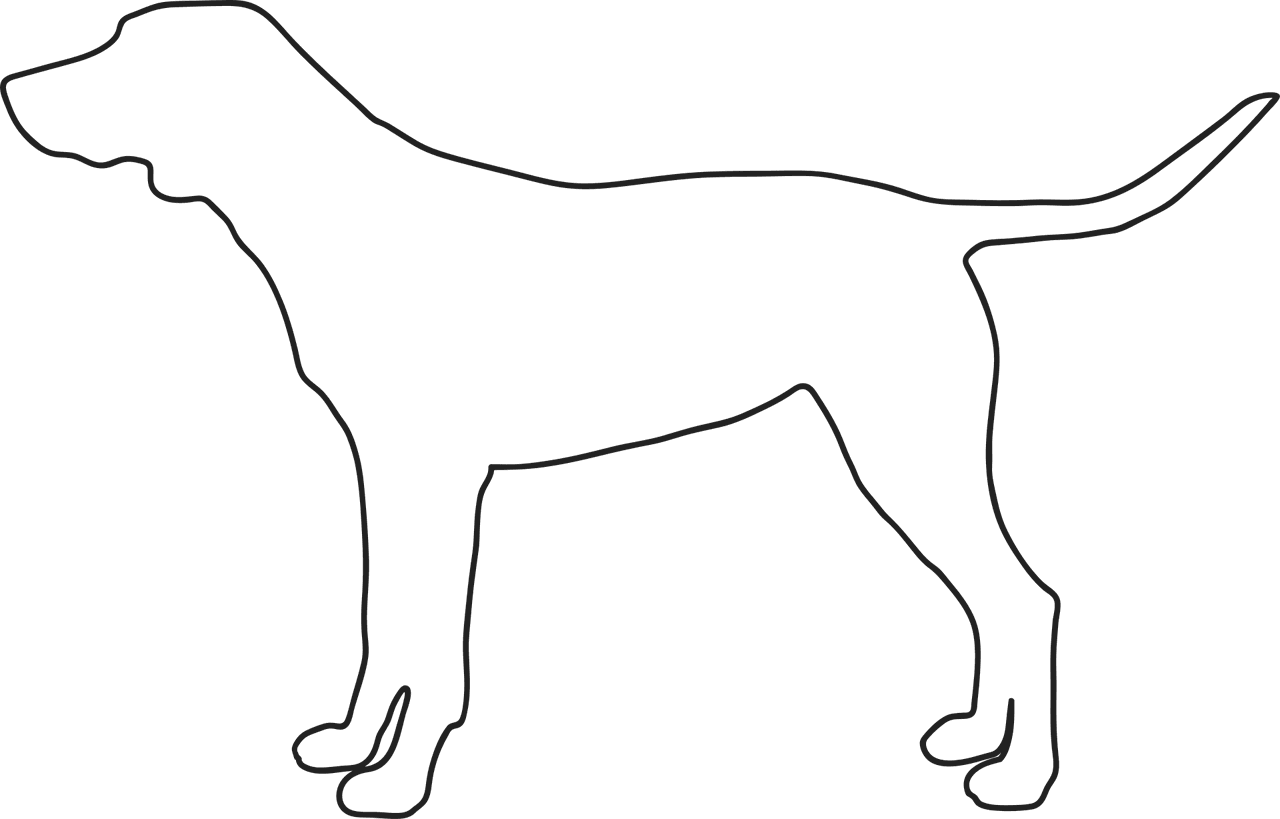
This is the same definition MidWest uses for crate length. It is not the same as the “back length” used for coats, which starts at the base of the neck.
How to read the chart
The mapping we used
Every crate length on this page comes from the eight-band table below, applied to the breed's weight range:
| Dog's weight | Crate length | Usually sold as |
|---|---|---|
| 1–11 lb | 18–22 in | Tiny / XS |
| 12–20 lb | 24 in | S |
| 21–40 lb | 30 in | M |
| 41–70 lb | 36 in | Intermediate |
| 71–90 lb | 42 in | L |
| 91–110 lb | 48 in | XL |
Single figures and ranges
A single figure means the breed's whole weight range sits in one band. A range like 42–48 in means the breed spans two bands: smaller dogs of that breed fit the lower figure, larger ones need the higher one. When in doubt, take the larger.
The rows we flagged
A few breeds carry a note because their shape, not their weight, decides the crate — long-backed dogs like the dachshund and corgi need more length than their weight suggests, and deep-chested dogs like the boxer and whippet need more interior height. Those notes are ours, not the AKC's.
Worked examples
Two rows spelled out, so you can check our arithmetic:
- Beagle: the AKC gives two varieties: the 13-inch beagle (under 20 lb) and the 15-inch beagle (20–30 lb). The full range therefore starts below 20 lb and runs up to 30 lb. On our bands, 20 lb lands in the 12–20 lb band (24 in), and anything under 12 lb lands one band lower (22 in), which is where the row's lower figure comes from; 30 lb lands in the 21–40 lb band (30 in), so the row reads 22–30 in.
- Labrador Retriever — AKC weight 55–80 lb. 55 lb is in the 41–70 lb band (36 in) and 80 lb is in the 71–90 lb band (42 in), so the row reads 36–42 in.
If a row looks wrong, this is the arithmetic to re-run — not a lookup table you have to take on trust.
The two-minute measurement
If you take nothing else from this page: this is the answer, and the chart is only the fallback.
- Stand the dog up, on a hard floor, weight even on all four feet.
- Length: nose tip to the base of the tail — the tail base, not the tail tip.
- Height: floor to the top of the head, head held naturally, neck not stretched up.
- Add your margin to both figures, so the dog can turn and lie flat.
- Compare to the interior, not the outside. A "42-inch crate" is usually measured outside, and the interior is smaller.
Then put the two numbers into the calculator, or compare them directly against a product's interior dimensions.
Why the size of a dog crate matters more than most gear
Too small: it stops being a resting place
A crate has to let the dog stand upright, turn around, and lie flat. Below that, the dog cannot settle, and a crate that cannot be rested in stops doing the one job it was bought for.
Too large: house training gets harder
Dogs generally avoid soiling where they sleep. Give a puppy far more space than it needs, and it can use one end as a toilet while it sleeps at the other — which is the habit you were trying to prevent. That is what dividers are for: buy the adult size and then shrink the usable space to what the puppy actually needs.
Getting it right is cheaper
A crate bought twice costs more than one bought at the right size, and the wrong crate is usually a return rather than a repair. Since the measurement takes a minute and the crate lasts years, it is worth doing the minute.
When to ignore this chart and measure
Weight is a shortcut for people shopping online without a tape measure. It is not how crates are actually sized. Use the tape measure if any of these apply:
| Situation | Why the chart can be wrong |
|---|---|
| Long-backed breeds (dachshund, corgi, basset hound) | Their length comes from the back, not from weight — they often need one size up |
| Deep-chested breeds (boxer, whippet, greyhound, great dane) | Interior height is the limiting number, not length |
| Dogs outside the breed's typical weight | The chart describes the breed, not your individual dog |
| Puppies | Buy for the adult size and use a divider; the puppy's current size is the wrong target |
| Mixed breeds | There is no breed row — use the calculator with the dog's actual weight, or measure |
| Any dog whose ribs you can't measure by eye | Ten seconds with a tape beats any table, including ours |
For the how-to, use the dog crate sizes calculator — it walks through the measurement and takes your dog's actual weight or height.
Buying from the chart: what to watch
Size names are not standard either
"Medium" from one maker is not the same box as "medium" from another, exactly as with harnesses. Go by the interior dimensions in inches on the listing, and treat XS/S/M/L as a rough label, not a measurement.
Wire, plastic or soft-sided
| Type | Best for | What to watch |
|---|---|---|
| Wire (folding, single or double door) | Home use and house training; most include a divider | Heavier, and noisier on a hard floor without a mat |
| Plastic / airline style | Travel and dogs who prefer an enclosed den | Fewer come with dividers; check the interior height |
| Soft-sided | Light travel with a calm adult dog | Not for chewers or dogs who scratch at the door |
| Furniture style (wood, end table) | Living rooms where looks matter | Heaviest and priciest; interiors can be much smaller than exteriors |
The one feature worth paying for
A divider panel. It lets you buy the adult crate once and shrink the space while the dog is small and still learning — which is the difference between buying one crate and buying two.
Mixed breeds and dogs off the chart
There is no row for a mixed breed, and there cannot be one — the chart is built from breed standards, and a mixed breed does not have one. Three ways to handle it:
- Best: measure the dog (the two-minute method above).
- Next best: take the larger of the two parent breeds' rows, then check it against the dog's actual weight.
- If you only know the weight: enter it in the calculator and use the band it falls into.
A dog that is a cross of a Labrador and a poodle is not "a Labrador with a poodle's coat" — its frame can land anywhere between the two, which is exactly why the tape measure beats the table.
Once you have the right size
Where to put it
The size is only half the job; a correctly sized crate in the wrong place will not get used.
- Near the family, not in a back room. Dogs settle better where they can see and hear you. For a new puppy, beside the bed for the first weeks is common.
- Out of traffic. Not in a doorway or a hallway people step through.
- Away from direct sun, radiators, and drafts.
- On a stable surface. Wire crates rattle on hard floors — a cheap mat underneath makes a surprising difference at night.
What goes inside
Keep it simple: a washable bed or mat, and one safe chew toy. For puppies, skip thick plush bedding they might chew and swallow. Unless you are traveling, leave the water bowl out of the crate — it gets tipped, and then the crate is wet.
Covers
A cover helps dogs who settle better in a den-like space, and it cuts down barking at things outside. Whatever you use, leave the airflow open — a crate is not a sealed box.
Keeping it usable
Expect accidents in the first months. A crate with a removable, wipeable tray is much easier to live with than a fixed floor. Put a washable pad in the tray rather than newspaper — pads stay put and absorb better. Weekly cleaning is usually enough; if the dog soils the crate, clean it straight away with an enzymatic cleaner rather than a scented household spray, so the crate does not start smelling like a toilet.
Five mistakes this chart cannot save you from
| Mistake | What goes wrong | Do this instead |
|---|---|---|
| Buying for the puppy's current size | The crate is outgrown in weeks | Buy the adult size and use a divider |
| Comparing exterior dimensions between brands | Two "36-inch" crates can differ inside | Compare interior length, width, and height in inches |
| Using the breed row for a dog well outside the breed's weight | The crate is the wrong size for your dog | Enter the dog's real weight, or measure |
| Buying the biggest crate "to be safe" | A puppy can toilet at one end and sleep at the other | Right size plus a divider, opened up as the dog grows |
| Forgetting height | A dog that cannot stand upright will not rest | Check interior height against standing height, not just length |
Questions we get a lot
What size dog crate does my dog’s breed need?
Find the breed in the chart and read across. Treat the figure as a starting point, then check the interior dimensions of the specific crate you are buying.
Where do these lengths for dog crates come from?
The weights are the AKC's published breed ranges. The crate lengths are ours, produced by running those weights through the mapping table above. No welfare body or crate maker publishes a breed-by-breed crate chart — we checked, and we say so rather than implying otherwise.
Why does one breed show a range?
Because its typical weight spans two bands. The lower figure suits smaller dogs of that breed; the higher one suits larger dogs.
My dog is smaller than the average for its breed. Do I use this row?
Use it as a starting point but size down if your dog is well under the breed's low end — or better, enter the dog's real weight in the calculator, so the number reflects your dog, not the breed.
Is a bigger dog crate always better?
No. For toilet training, too much space lets a puppy use one end as a toilet. Buy the adult size and use a divider to shrink the space while they are small.
Why isn't my breed listed?
The chart covers 53 breeds. For anything else, use the calculator with your dog's weight, or measure directly — a mixed breed has no breed row by definition.
Can I use this for a puppy?
Use the adult row for your breed, buy that crate, and use a divider while the puppy grows. The puppy's current weight would point you at a crate it will outgrow.
Does a dog crate cover change the size I need?
No. A cover sits over the crate; it does not change the interior dimensions.
What about a dog bed instead of a dog crate?
Different question, different numbers — beds are sized more loosely than crates. See the dog bed size chart.
Which crate type should I buy?
Wire, plastic, and soft-sided crates come in the same sizes but suit different jobs. The crate calculator covers the trade-offs.
How we built this chart
So you can audit it rather than trust it:
- Weights are the AKC's. Each breed's typical adult weight was read from its page on akc.org/dog-breeds (dog breed standards) on October 13, 2026, and recorded verbatim — including the awkward ones like "under 28 lb".
- Crate lengths are our derivation. Each weight range was put through the mapping table above, band by band using all eight bands: the lower figure comes from the breed's minimum weight, the higher from its maximum. Where both land in the same band, the row shows a single figure.
- The flags are ours too. Long-backed and deep-chested notes come from us, not from any standards body, and they exist because weight is a poor proxy for those shapes.
- What we could not find. Animal welfare organizations do not publish a weight-to-crate-length table — we looked, including at the AKC and the Humane Society. Crate makers publish crate lengths: MidWest Homes for Pets publishes its own crate size chart, and the eight crate lengths on this site are taken from that crate line. MidWest publishes crate lengths and the breeds that suit them, but it does not publish weight bands — so the weight bands on this site are ours, and the breed-by-breed mapping onto them is ours too.
Known gap: one breed, the Cane Corso, is described by the AKC as "proportionate to height" with no weight figure, so it is not in the chart. A few rare breeds on the AKC list are also left out rather than guessed at.
Related tools
- Dog Crate Sizes Calculator
Enter your dog's actual weight and get the size, plus how to measure. - Dog Harness Size Chart
Chest girth, and why size names are not standard. - Dog Bed Size Chart
Bed size from weight and sleeping position. - Dog Feeding Calculator
Turn your bag's feeding table into cups per meal.
Last updated: 2026-10-19.