Dog Collar Size Chart
Collar sizing confuses people for one reason: the size refers to your dog's neck, not to how long the collar is. This page sorts that out, then checks your measurement against the ranges for the collar you are actually buying.
Collar size checker
Ready when you are
Measure the neck first — the guide below shows exactly where.
Nothing you type is stored on our server.
No signup · No email · Everything is calculated in your browser
Your collar's size ranges (optional — copy them from the product page)
Collar sizes usually overlap, because the strap adjusts. If your number falls in two rows, both will fit — see the notes after you calculate.
—
That is the size to shop — the matching products are listed below.
How to measure the neck
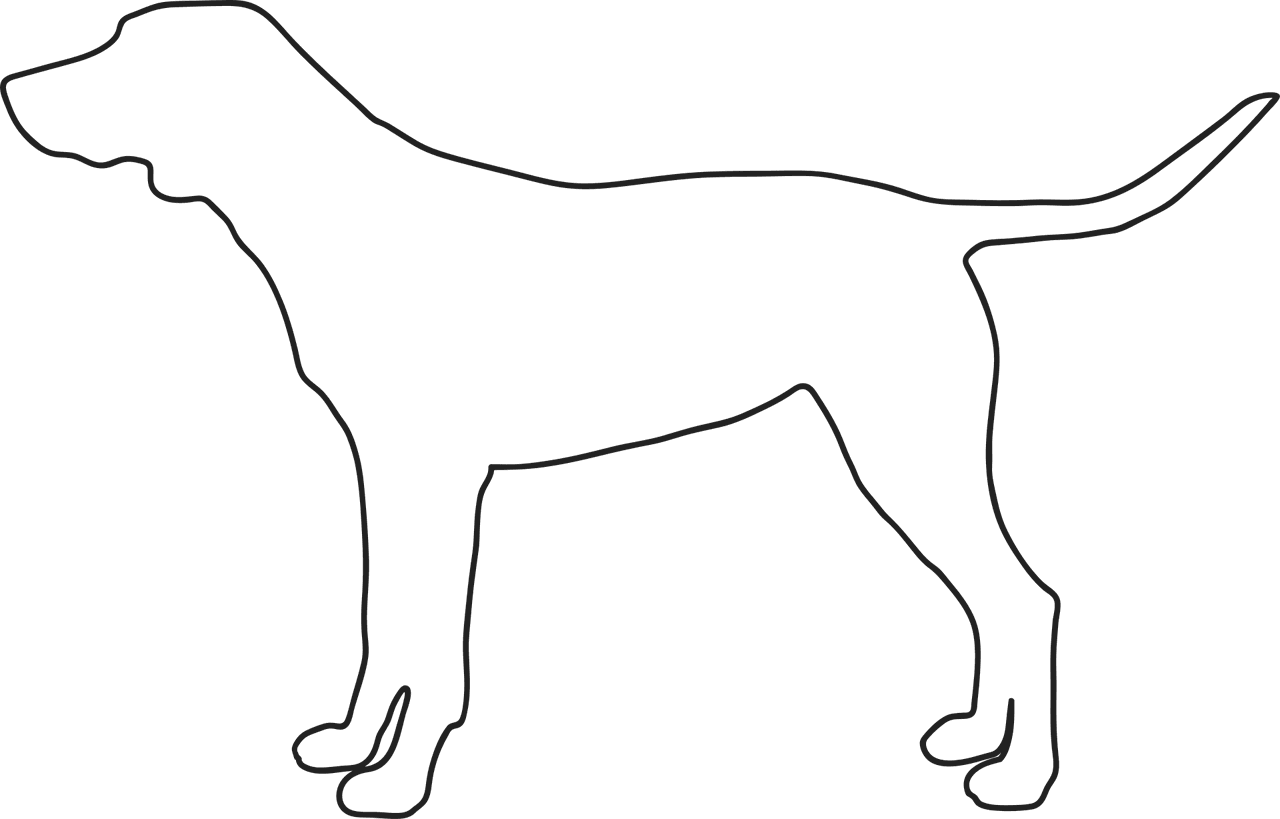
The two-finger rule is the AKC’s, and it is what keeps a collar from being too tight.
Where the tape goes
Around the base of the neck, where the collar actually sits — not up behind the ears, and not down on the chest.
This is the one measurement a collar is sized on. Nothing else on this page works if this number is wrong, so it is worth two attempts.
- Stand the dog up, on a hard floor, weight even. Measuring a sitting or lying dog changes the number.
- Start near the withers — the ridge between the shoulder blades — and wrap the tape around to the front of the chest.
- Keep the tape level all the way round, not sloping up at the back.
- Slide two fingers under the tape. That is the allowance: snug enough to stay put, loose enough not to pinch.
- Read it where the tape meets, then measure once more. An inch here is the difference between two sizes.
No tape measure?
Use a piece of string, a ribbon or a shoelace. Wrap it snug — not tight — mark where it overlaps, then lay it flat against a ruler.
A calm dog measures better
A treat held at nose height, a second pair of hands, or measuring just after a walk all help. A wriggling dog adds an inch of error, and an inch is often a whole size.
Can I just use the collar I already have?
Yes, and it is a useful cross-check — but lay it flat and measure from the buckle to the hole you actually use, then compare that with the new collar's "fits neck" range. A worn collar also stretches slightly, so treat it as a sanity check rather than your primary number.
What your collar size means
The result above is not one fixed number. Collars adjust, so a single size covers a spread of several inches — and your dog only has to fall inside that spread, not match a figure exactly.
That is why the checker can put you in more than one size, and why that is not an error. If your neck measurement lands in the overlap between two rows, both genuinely fit; the difference is how much adjustment you have left at either end.
Where to sit inside a size
Aim for the middle of the range where you can. A dog sitting in the middle has room to tighten or loosen as the strap settles, as the coat changes with the season, and as a puppy grows. A dog pressed against the top edge is one meal or one winter coat away from needing the next size up.
What the tool does not decide for you
It will not tell you which type of collar to buy. A flat collar, a martingale and a breakaway all fit differently and do different jobs — that comparison is in the table further down this page.
Dog collar vs dog harness: two different numbers
This is the single most common mix-up. A collar and a harness for the same dog use completely different measurements, taken in different places, and they are not interchangeable.
| Collar | Harness | |
|---|---|---|
| What you measure | Neck circumference | Chest girth |
| Where | Base of the neck, where the collar sits | Widest part of the rib cage, just behind the front legs |
| Typical adult dog | around 10–30 in (our estimate) | around 15–40 in (usually larger than the neck; our estimate) |
| Allowance | Two fingers under the tape | Two fingers under the tape |
| Adjustability | High — collars adjust over several inches | Moderate — harnesses adjust less |
| Other numbers | Usually none needed | Step-in styles also need a neck measurement |
If you are buying a harness rather than a collar, use the dog harness size chart — it works from chest girth, and it explains why harness size names are not standard either.
Size vs length: the other mix-up
What the size number means
When a collar is sold as "Medium — fits necks 14–20 in", the 14–20 is a neck range. It is not the length of the strap.
Because collars adjust, one size covers a spread of several inches. That is also why two brands can both call something "Medium" and mean different spreads — and why the same size name can fit your dog in one brand and not in another.
Why the strap is longer than the size
Laid flat, a collar for a 15-inch neck is noticeably longer than 15 inches: the strap has to go around the neck and through the buckle, and it carries extra holes or a slider, so the fit can be changed. If a listing only gives total length, that number tells you very little about which neck it fits.
What to look for on a listing
- "Fits neck 14–20 in" — the useful figure. This is the one to compare with your measurement.
- "Adjustable 14–20 in" — the same thing, phrased differently.
- "Overall length 22 in" — not the same as neck size. Treat it as marketing detail, not sizing.
- "Size M" on its own — not enough information. Find the range.
Common neck ranges (rough guide)
If you do not have a product page in front of you, this table shows the kind of neck range each size name covered across the collar listings we sampled. It is a starting point, not a standard, and the ranges overlap on purpose — because the brands do.
| Size name | Neck range seen | Fits a neck of |
|---|---|---|
| X-Small | 11–17 in | x small neck |
| Small | 12–22 in | small neck |
| Medium | 15–23.5 in | medium neck |
| Large | 17–28.5 in | large neck |
| X-Large | 19.5–36 in | x large neck |
Why brands disagree
Here are neck ranges for collars we sampled, grouped by the size name they were sold under:
| Size name | Neck ranges found on different listings |
|---|---|
| Small | 14–17 in | 13–22 in | 12.5–20 in | 12–17.5 in |
| Large | 17–26 in | 18.5–28.5 in |
| X-Large | 22–30 in | 22–36 in | 22–35 in | 19.5–30 in |
Checking the fit on your dog
Sizing gets you the right collar; these checks tell you whether it is adjusted correctly. Do all four before you trust it on a walk.
| Check | Good fit | If it fails |
|---|---|---|
| Two-finger test | Two fingers slide between collar and neck | Won't fit: too tight — loosen it a notch |
| Pull-over test | You cannot pull the collar over the dog's head | Slides off: too loose — go tighter, or a smaller size |
| Rub check after a walk | No red lines, no bald patch, no chafing | Rubbing: too tight, or a material that irritates |
| Tag hang | Tags hang below the collar, not pressing on the throat | Tags digging in: move them or use a tag pouch |
Puppy check: run both the two-finger and pull-over tests monthly while a puppy grows. A collar that was right at eight weeks is often too tight by twelve.
Collar types and what they change
The neck measurement is the same for all of them. What changes is how much adjustment you get, and what jobs the collar is safe for.
| Type | Best for | What to watch |
|---|---|---|
| Buckle (traditional) | Everyday wear with ID tags | Holes set the adjustment; check the hole you use is not the last one |
| Buckle with a quick-release clip | Fast on and off | Plastic clips age — replace if it starts to feel loose or stiff |
| Martingale / limited-slip | Sighthounds and narrow-headed dogs that back out of collars | Must be adjusted so it cannot tighten enough to choke |
| Rolled / round leather | Long coats, where a flat collar mats the fur | Measure on the snug side; there is less adjustment than a flat strap |
| Breakaway / safety buckle | Cats, and dogs who get caught on things | Releases under load by design — not for walking on a leash |
| Slip / choke style | Specialist training in experienced hands | No size range to check against; a plain collar with ID is the default |
Safety: what to avoid
- Do not walk a dog on a collar if it pulls hard. Pressure on the throat is the reason we suggest a harness here; a front-clip harness spreads the load across the chest instead. The University of Illinois College of Veterinary Medicine describes the throat risk of collars that tighten: “Choke collars put dogs at risk for damage to the esophagus or trachea.”
- Our safety rule: do not leave a collar on an unattended dog in a crate. A tag or buckle can catch on wire bars. Use a plain collar with a quick-release clip, or remove it in the crate.
- Do not use a choke or prong collar as everyday wear. They are training tools with a specific technique, and they are not designed to hold ID tags.
- Retire any collar with a frayed strap, a cracked clip or a stiff buckle. It fails at the worst moment.
- Two tags, one ring. Keep the ID tag and the rabies tag on a single ring so they cannot tangle around the throat.
If your dog has a neck, throat or breathing condition — or has had neck surgery — talk to your vet about which collar, if any, is appropriate before you buy.
Puppies and growing dogs
Expect to buy more than one
A puppy's neck grows quickly, so a collar that fits at eight weeks is usually outgrown by four or five months. Two options, both reasonable:
- A cheap adjustable collar in the puppy's current size, replaced as it grows. Least fuss.
- A collar sized for the expected adult neck with an extra hole punched or a slider, worn snug while the puppy grows into it. Check the two-finger gap every month.
The monthly check
Two-finger gap, then the pull-over test. If either fails, adjust or replace that day — an outgrown collar is both uncomfortable and an escape risk. This tool has no growth timeline built in, because we could not find an authoritative month-by-month neck chart; re-measuring takes seconds and is more reliable than a prediction.
Six measuring mistakes
| Mistake | What it does | Fix |
|---|---|---|
| Comparing your neck measurement against the collar's total length | You buy a collar that is far too big | Compare against the "fits neck" range, never the strap length |
| Using the chest girth from a harness order | Way too large — the chest is much bigger than the neck | Measure the neck separately |
| Measuring up behind the ears | Too small; the collar will not buckle | Measure at the base, where the collar sits |
| Pulling the tape tight | Too small, and uncomfortable once it is on | Two fingers under the tape |
| Measuring a sitting or lying dog | Inconsistent, usually too small | Stand the dog up |
| Only measuring once over a wriggling dog | An inch of error — often a whole size | Measure twice, with a treat |
What to buy
As an Amazon Associate I earn from qualifying purchases. The links below are affiliate links — they cost you nothing extra. This page contains affiliate links. If you buy through them, we may earn a commission at no extra cost to you.
Your result above gives the neck range — these are the collars that fit it, not a guess.
Questions we get a lot
How do I know what size collar to buy?
Measure the neck at the base, then find which range on your collar's chart contains that number. Ignore the strap length.
Is collar size the same as collar length?
No. Size is the neck it fits. A collar for a 15-inch neck is longer than 15 inches laid flat, because the strap goes through the buckle and carries the adjustment.
How tight should a collar be?
Snug enough that it cannot come off over the head, with room for about two fingers. Both tests matter, and they pull in opposite directions — which is why you check both.
Can I use my harness measurement for a collar?
No. Harness size comes from chest girth, which is several inches larger than the neck. They are different measurements in different places.
My dog is between two collar sizes. Which one?
If both ranges contain your measurement, either fits. Take the smaller for a tidier fit on a full-grown dog; take the larger if the dog is still growing or grows a thick winter coat.
Why does a "medium" collar fit differently between brands?
Because size names are not standardized. We sampled listings where "medium" covered 15–23.5 inches, and another where "small" covered 13–22 inches — the names overlap by that much.
Do I need a different collar for a puppy?
Not a different type, but a smaller size, and you will re-measure monthly. Check the two-finger gap and the pull-over test every time.
Is a harness better than a collar for walking?
If your dog pulls, a harness spreads the load across the chest instead of the throat, which most trainers prefer. A collar with an ID tag is still the usual choice for identification. If your dog has a neck or breathing condition, ask your vet.
What does "limited slip" or "martingale" mean for sizing?
It has a second loop that tightens a little when the dog pulls, so narrow-headed dogs cannot back out. Size it so that when fully tightened it still cannot choke — check that by hand before you use it on a walk.
Should the collar stay on indoors?
Many owners keep a light collar on for ID, but remove it in the crate, so nothing can catch. Use a quick-release clip if you do leave it on.
How do I measure without a tape measure?
String, ribbon or a shoelace around the neck, mark the overlap, then lay it flat against a ruler.
Does a thick coat change the collar size?
Yes. A double coat adds bulk at the neck, so a collar that fits in summer can be tight in winter. Measure in the coat conditions you walk in.
How we work this out
- Your neck measurement — taken the way the AKC describes: base of the neck where the collar sits, dog standing, two fingers under the tape.
- Your collar's ranges — copied from the product page. We do not bundle a size table of our own, because size names are not standardized and a table of ours would be wrong for some products.
- The comparison — we check which ranges contain your measurement and tell you when more than one does, which is normal for collars because they adjust.
What this tool will not do: it will not guess a size from your dog's breed or weight, and it will not override a product's chart. It also cannot tell you whether a collar type suits your dog — a flat collar, a martingale and a breakaway all fit differently and do different jobs. If your dog has a neck, throat or breathing condition, ask your vet before choosing a walking collar.
Related tools
- Dog Harness Size Chart
Chest girth — the measurement a collar does not use. - Dog Crate Sizes Calculator
The other "get the size right first time" decision. - Dog Crate Size Chart by Breed
53 breeds, with the weight each figure comes from. - Dog Feeding Calculator
Turn your bag's feeding table into cups per meal.
Last updated: 2026-10-19.